In any expanding smart home, battery-powered sensors (door contacts, motion detectors, climate monitors) cannot route mesh packets for other devices—they are pure End Devices that sleep 99% of the time to conserve energy. When you place a sensor in a detached garage, garden shed, or distant basement, communication fails because there are no nearby mains-powered Routers to relay the radio packets.
Instead of purchasing overpriced proprietary smart plugs just to act as repeaters, the Espressif ESP32-C6 microcontroller provides an extraordinary, low-cost solution: an industrial-grade, mains-powered Zigbee 3.0 Mesh Router and Thread Range Extender with +20 dBm output power and high receiver sensitivity for under $6.
Why the ESP32-C6 Excels as a Mesh Router Node
- Native IEEE 802.15.4 Radio: Direct hardware implementation of the physical and MAC layers for Zigbee and Thread without external transceivers.
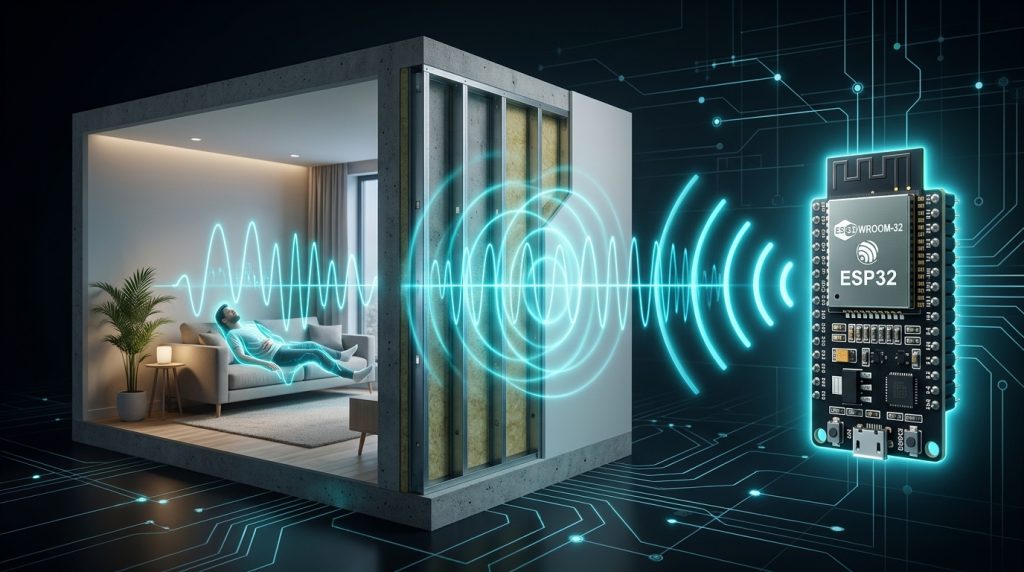
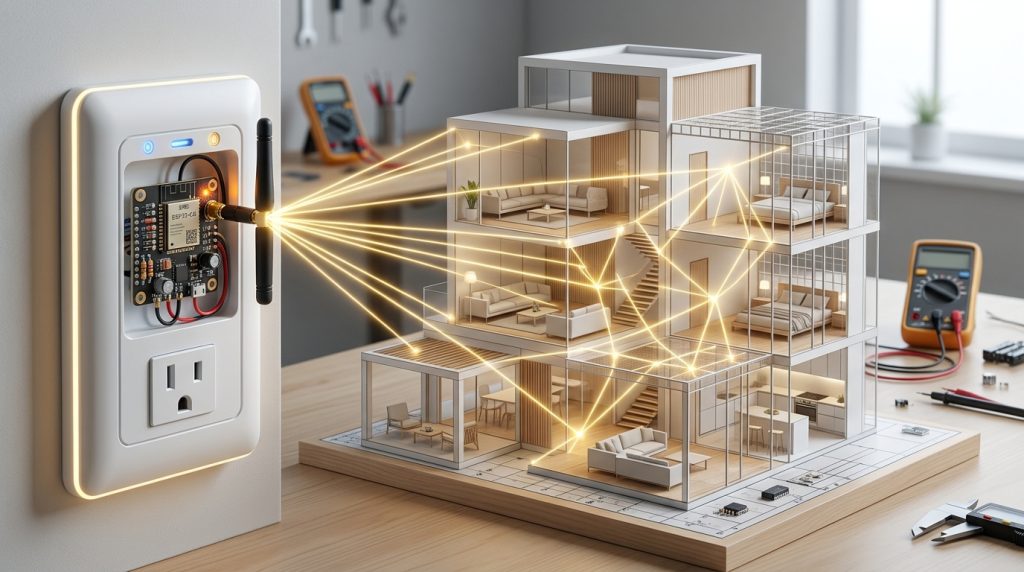
- High RF Transmit Power: Built-in power amplifier delivers up to +20 dBm (100 mW) transmit power, penetrating reinforced concrete walls and multiple floors with ease.
- Large Routing Table Capacity: With 512 KB of internal SRAM, the ESP32-C6 can route packets for 50+ concurrent child end devices, far exceeding commercial smart plugs that bottleneck at 8–12 children.
Option 1: Flashing ESP32-C6 as a Dedicated Zigbee 3.0 Router
Using Espressif’s official ESP-Zigbee-SDK, build and flash the standalone router firmware:
# Set target to ESP32-C6
idf.py set-target esp32c6

# Navigate to the Zigbee HA network steering router example
cd examples/esp_zigbee_HA_sample/HA_on_off_switch
# Configure device type as ROUTER in menuconfig
idf.py menuconfig
# Component config -> ESP Zigbee -> Zigbee Device Type -> Router

# Build and flash
idf.py -p /dev/ttyUSB0 flash monitor
Pairing with Zigbee2MQTT and Home Assistant
- In your Zigbee2MQTT dashboard, click Permit Join (All).
- Power on your freshly flashed ESP32-C6 board. The firmware automatically initiates network steering on the active Zigbee channel.
- Within 10 seconds, Zigbee2MQTT will discover the device as an Espressif Zigbee Router.
- Navigate to the Map tab in Zigbee2MQTT. You will observe your distant battery sensors re-routing their communication paths through the robust, high-LQI ESP32-C6 node!
Hardware Build: The Stealth USB Wall Repeater
To deploy repeaters inconspicuously around your home:
- Solder the ESP32-C6 to a miniature 5V-to-3.3V LDO regulator inside an old 5W phone charger casing.
- Choose an ESP32-C6 development board equipped with an IPEX / U.FL external antenna connector and attach a +3 dBi omnidirectional dipole antenna for maximum building penetration.
- Plug the module into an unused hallway or garage outlet: your smart home mesh dead zones are permanently eliminated.