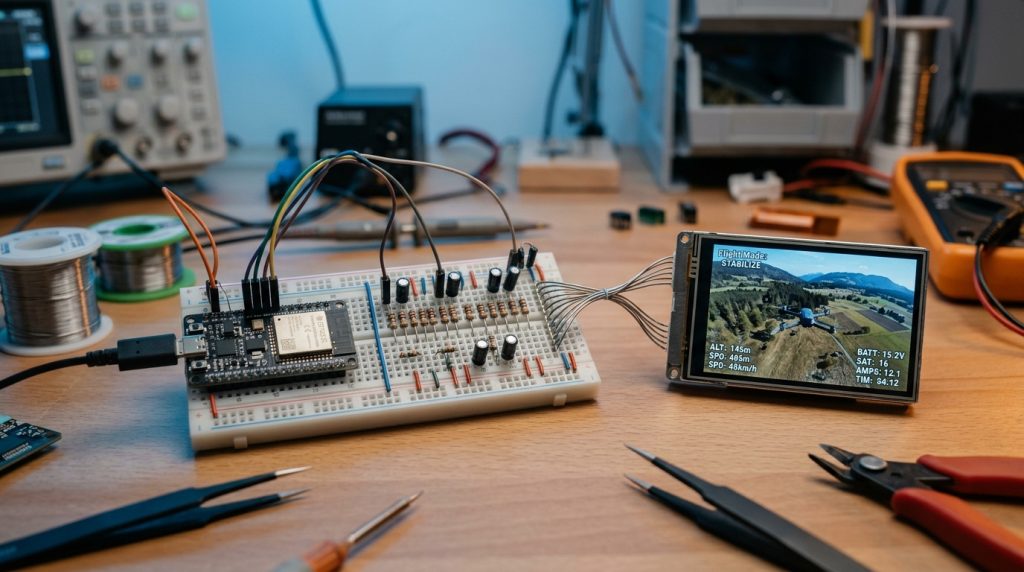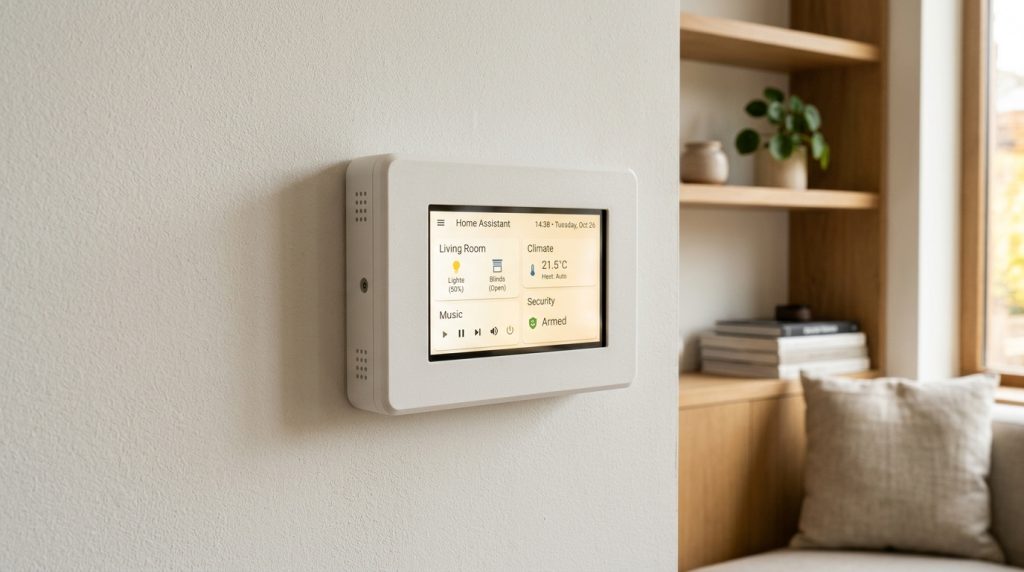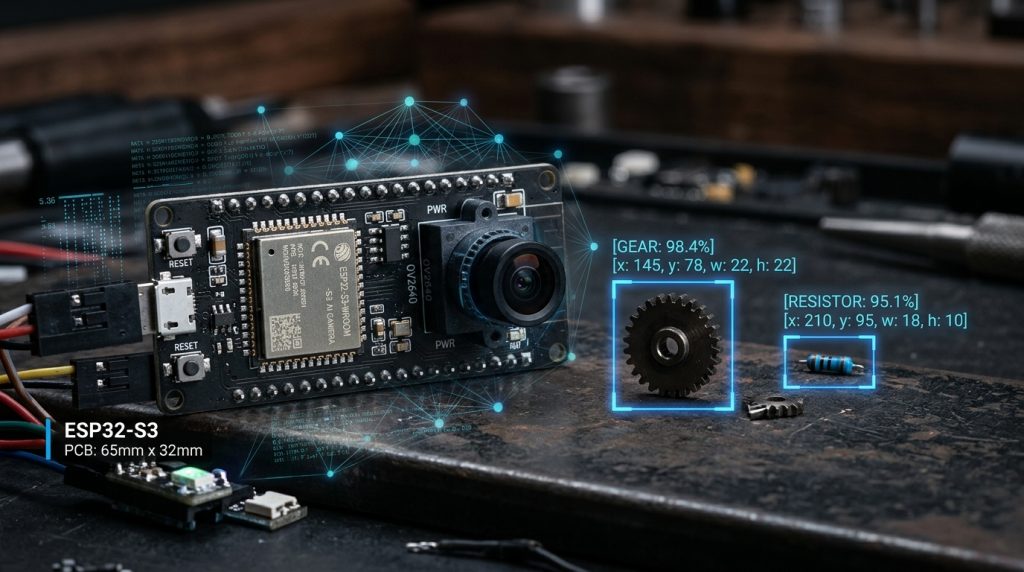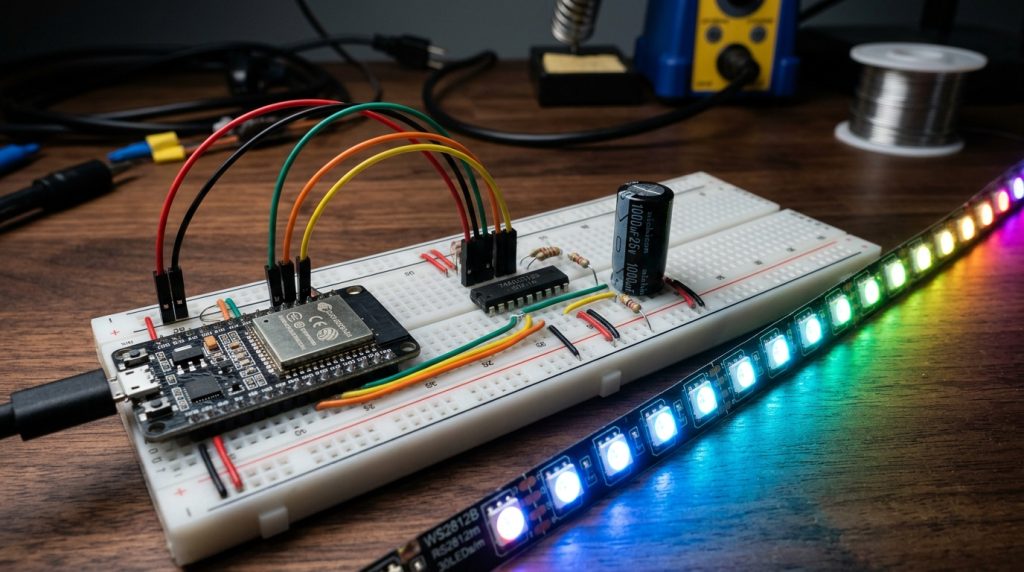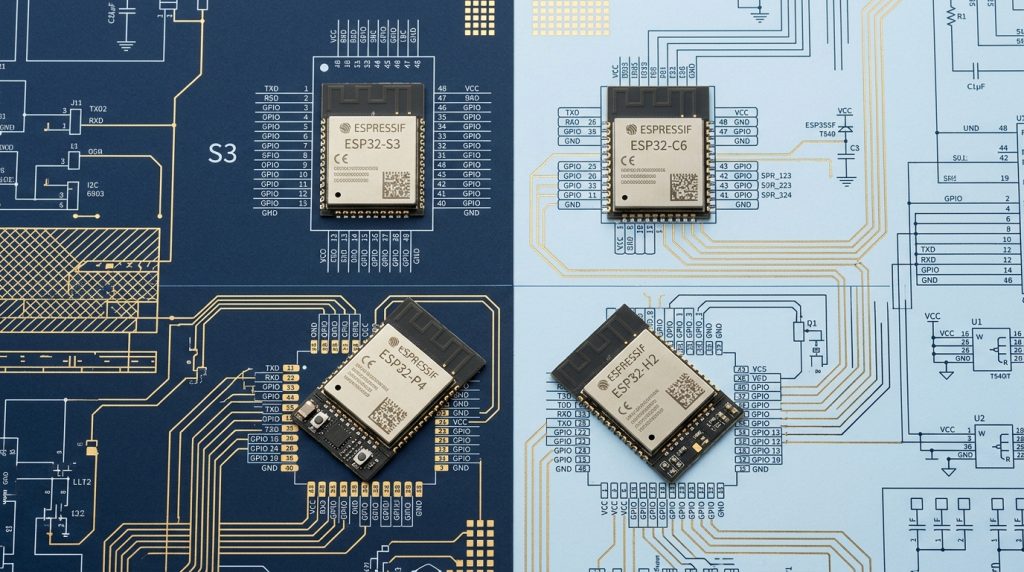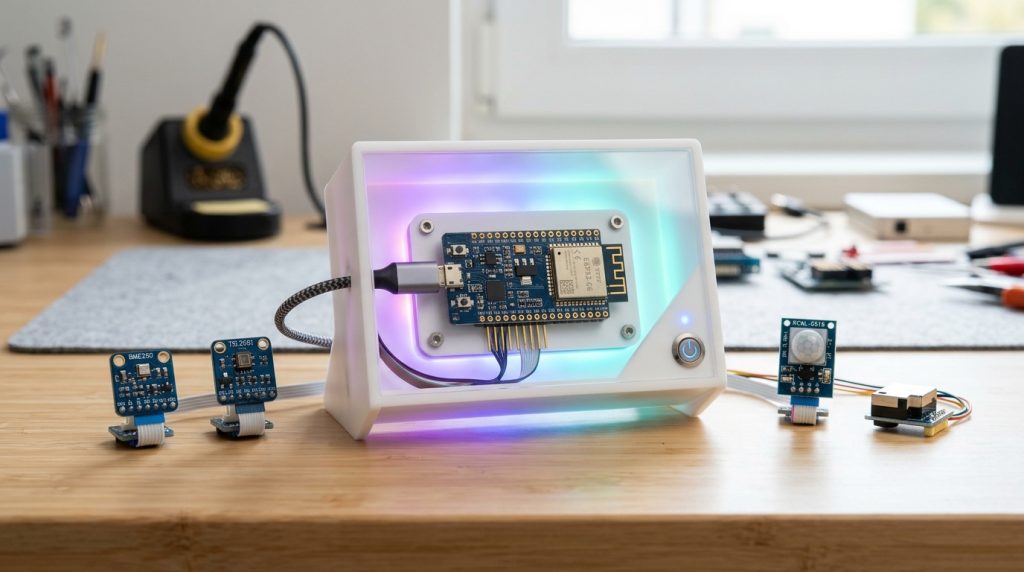
Commercial smart home multi-sensors often present an unwelcome compromise: battery-powered units sacrifice update frequency and presence accuracy to conserve energy, while mains-powered proprietary sensors cost upwards of $60 and lock you into closed cloud ecosystems. Building your own custom room node solves both issues, and with the modern Espressif ESP32-C6, you can construct an ultra-compact, modular sensor hub that costs less than $15 to assemble.
In this guide, we engineer a modular room sensor platform using the ESP32-C6 RISC-V microcontroller and ESPHome. Designed around an expandable I2C bus and low-latency GPIO interrupts, this single device measures environmental metrics, monitors ambient illumination, detects human presence, and provides visual status alerts via an addressable RGB ring.
Why the ESP32-C6 Is the Ultimate Sensor Hub Core
While the venerable ESP8266 served the maker community admirably for over a decade, it lacks multiple hardware UARTs, has limited I2C bandwidth, and suffers from high power draw. The ESP32-C6 represents a monumental upgrade:
- Single-Core 32-bit RISC-V CPU (160 MHz): Highly efficient instruction set with ultra-fast mathematical execution.
- Native Wi-Fi 6 & 802.15.4 Thread Support: Deploy as a Wi-Fi client today, or migrate to Matter-over-Thread tomorrow without changing hardware.
- Ultra-Low Power (ULP) RISC-V Co-processor: Samples sensors and monitors threshold interrupts in deep sleep while consuming just 15 uA.
- Advanced Peripheral Multiplexing: Assign hardware I2C, SPI, and UART to virtually any available GPIO pin.
Modular Sensor Architecture: Selecting the Best Components
To keep the hardware modular and clean, we partition the sensor peripherals across dedicated interfaces:
| Subsystem | Selected Hardware Module | Interface & Pins | Measurement Metrics |
|---|---|---|---|
| Climate Engine | Sensirion SHT40 or Bosch BME280 | I2C (SDA: GPIO19, SCL: GPIO20) | Temperature (±0.2°C), Humidity (±1.5%), Barometric Pressure |
| Ambient Light | Rohm BH1750 Lux Sensor | Shared I2C Bus (Address 0x23) | 0 to 65,535 Lux illuminance for adaptive lighting |
| Human Presence | Hi-Link HLK-LD2410 mmWave Radar | UART (TX: GPIO17, RX: GPIO16) | Micro-breathing presence & motion distance gates |
| Visual Feedback | Single WS2812B NeoPixel RGB LED | GPIO8 (RMT Peripheral) | Alarm state, presence indicator, and air quality status |
Complete ESPHome Production YAML Configuration
The following ESPHome configuration compiles natively on the ESP32-C6 platform, automatically exposing all sensors, calibration offsets, and status controls to Home Assistant over the native API:
esphome:
  name: modular-c6-room-sensor
  friendly_name: "Room Multi-Sensor Hub"

esp32:
  board: esp32-c6-devkitc-1
  framework:
    type: esp-idf

# Native Home Assistant API for instant encrypted communication
api:

ota:
  platform: esphome

wifi:
  ssid: !secret wifi_ssid
  password: !secret wifi_password
  power_save_mode: light

# Shared I2C Bus for Climate and Light Sensors
i2c:
  sda: GPIO19
  scl: GPIO20
  scan: true
  frequency: 400kHz

sensor:
  # Bosch BME280 Environmental Sensor
  - platform: bme280_i2c
    temperature:
      name: "Ambient Temperature"
      oversampling: 16x
    pressure:
      name: "Barometric Pressure"
    humidity:
      name: "Relative Humidity"
    address: 0x76
    update_interval: 30s

  # Rohm BH1750 High-Precision Lux Sensor
  - platform: bh1750
    name: "Room Illuminance"
    address: 0x23
    update_interval: 10s

# Hardware UART for mmWave Radar
uart:
  id: uart_radar
  tx_pin: GPIO17
  rx_pin: GPIO16
  baud_rate: 256000

ld2410:
  uart_id: uart_radar

binary_sensor:
  - platform: ld2410
    has_target:
      name: "Room Occupancy Status"
      device_class: occupancy

# Addressable RGB Status LED
light:
  - platform: esp32_rmt_led_strip
    rgb_order: GRB
    pin: GPIO8
    num_leds: 1
    rmt_channel: 0
    chipset: WS2812B
    name: "Status Indicator LED"
Power Management and Heat Dissipation Considerations
- Thermal Decoupling: The ESP32-C6 CPU and Wi-Fi radio generate a small amount of heat (approx. 0.5W to 0.8W during active transmissions). If the SHT40 or BME280 temperature sensor is mounted directly on top of the MCU PCB, it will read 2°C to 4°C above true ambient temperature. Always isolate the climate sensor on a separate breakout chamber separated by ventilation slits.
- Clean 3.3V Power Regulation: Use a low-dropout (LDO) regulator rated for at least 600mA (such as the AP2112K or ME6211) with ceramic 10uF filtering capacitors on both the input and output rails to ensure stable RF performance.