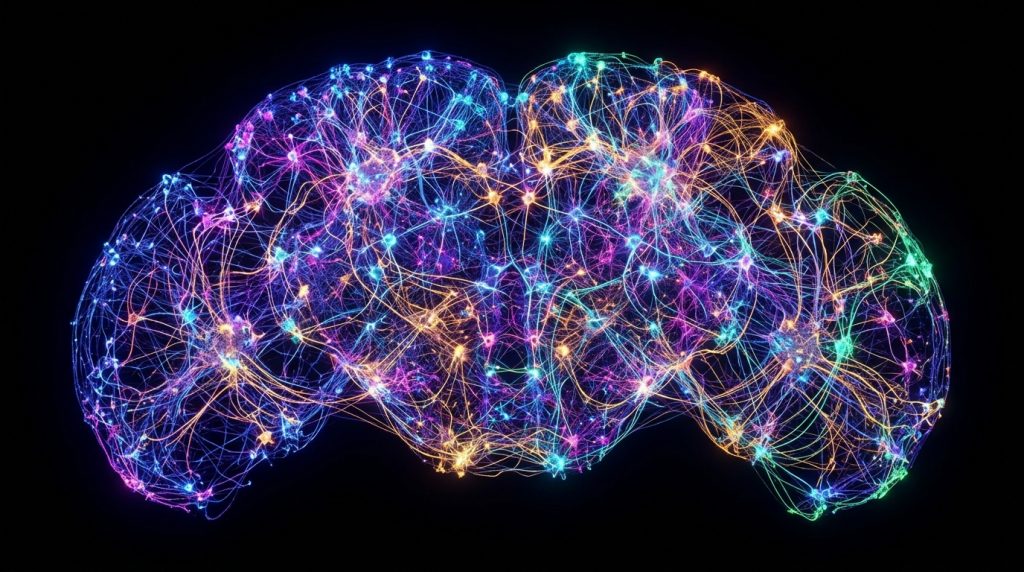
For more than a century, understanding the brain’s complete wiring diagram—the connectome—has been the holy grail of neuroscience. While researchers mapped the tiny 302-neuron nervous system of the C. elegans roundworm in 1986, complex animals capable of navigating 3D space, social courtship, and memory remained hopelessly out of reach. That barrier has officially fallen.
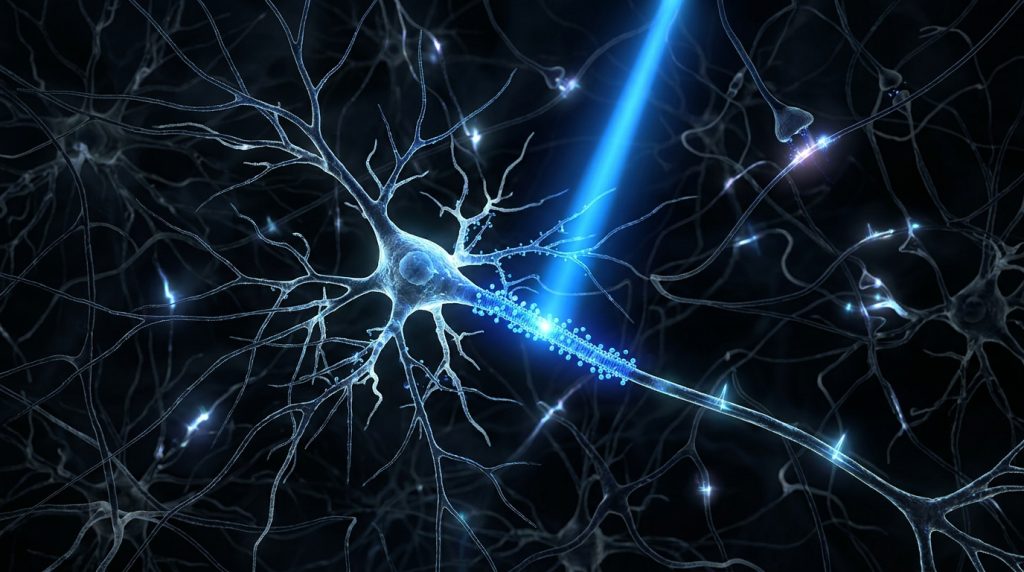
The international FlyWire Consortium (led by Princeton University and Cambridge) has achieved the monumental feat of digitizing the entire adult female fruit fly (Drosophila melanogaster) brain: a staggering 139,255 neurons and 54.5 million chemical synapses mapped in complete 3D resolution.
The Technical Feat: Serial Section Electron Microscopy
Reconstructing a brain no larger than a grain of sand required extraordinary micro-engineering:
- Nanometer Slicing: A single fly brain was embedded in plastic resin and sliced into more than 7,000 ultra-thin sections using a diamond knife.
- Automated Electron Imaging: High-throughput transmission electron microscopes captured petabytes of raw imagery at 4×4 nanometer pixel resolution.
- AI Segmentation & Crowdsourced Proofreading: Deep convolutional networks traced branching dendrites, while hundreds of global researchers spent thousands of hours manually proofreading ambiguous synaptic junctions.
What the Fly Connectome Reveals
| Brain Network Metric | FlyWire Connectome Data | Scientific Significance |
|---|---|---|
| Total Identified Neurons | 139,255 distinct cells | First complete connectome of a complex behaving animal |
| Total Chemical Synapses | 54.5 million mapped connections | Reveals exact neurotransmitter types (dopamine, GABA, etc.) |
| Wire Length | ~146 meters of axonal wiring | Packed inside a volume of less than 0.1 mm³ |
| Neurotransmitter Profiling | Predicted with 95%+ AI accuracy | Identifies excitatory, inhibitory, and modulatory pathways |
The Path to In-Silico Whole Brain Emulation
With the physical wiring diagram open-sourced, computational neuroscientists can now simulate complete neural circuits inside physics engines, unlocking profound insights into sensory processing and paving the foundation for future mammalian connectomics.